Thursday, March 17, 2011

Samsung Epic 4G: A Killer Multimedia Phone


The Samsung Epic 4G ($250 with a two-year contract from Sprint, as of August 20, 2010) stands out from its Galaxy S siblings for a few reasons. Unlike the others, it has a physical keyboard and a front-facing camera, and it's the second phone to run on Sprint's 4G network. How does it stack up against the other 4G device, the HTC EVO 4G? And how does it compare to other mega-smartphones in the Android universe? Read on.
Design
In the last week, I've reviewed three phones with hardware keyboards: the BlackBerry Torch, the Motorola Droid 2, and now the Epic 4G.Keyboard death watch? Not so much. Out of all of these phones, the Epic definitely has the best keyboard. The keys are nicely spaced and have a good clickiness to them.
If you don't feel like using the physical keyboard, you have even more options on the touchscreen. You can use the TouchWiz keyboard, the Swype keyboard, or the native Android keyboard. I found the display quite responsive, and big enough to type on comfortably.
Like the other Galaxy S phones, the Epic 4G sports a 4-inch Super AMOLED display. Samsung's Super AMOLED technology puts touch sensors on the display itself, as opposed to creating a separate layer (which Samsung's old AMOLED displays had), making it the thinnest display technology on the market. Super AMOLED is fantastic--you really have to see it in person. Colors burst out of the display, and animations appear lively and smooth. Some reviewers have noted that colors look oversaturated, but I don't really mind the effect. The display also does quite well in bright outdoor light, too, though the phone's glossy hardware sometimes reflects a killer glare.

Samsung Transform: An Average Mid-Level Android Phone


At first glance, the Samsung Transform on ($150 after new two-year contract from Sprint) looks like the Samsung Epic 4G's younger brother (also on Sprint). Both phones sport a slide-out keyboard and a front-facing camera. But once you actually hold and use the phone, you'll immediately notice the differences in specs, performance and design.
Slider Design
Despite the similar design to Epic 4G, the Transform's build quality is clunky and feels plasticky. The sliding mechanism however, is solid and the QWERTY keyboard was easy to pop out and use.
The keyboard's keys felt cheap and flat and trying to drum out longer text messages grew increasingly annoying with every typo. I often found myself just using the virtual keyboard in landscape mode rather than the hardware keyboard.
The Samsung Transform sports a 3.5-inch 320-by-480-pixel capacitive LCD screen, and at times, it looked a bit dim and blurry. On a sunny day, I could barely see the screen outdoors, even after messing with several brightness settings. The glare from the sunlight made it hard to see what I was doing on the device. Under the screen you find four soft keys (Menu, Home, Back, and Search), and at the top of the device find a standard 3.5-mm audio jack and a micro USB port behind a sliding door. On the left spine of the phone is a volume rocker and on the right you have the power button, a dedicated voice command key, and a camera button. There is a microSD card slot, but like many other Android phones you have to remove the back covering to get to it.
Performance and Software
Being a lower-end Android phone, the Samsung Transform is powered by an 800 MHz processor with 201MB of onboard memory. The capacitive touchscreen had problems registering my input at times. The biggest tweak is the inclusion of Sprint ID. When you first set up the device, you are prompted to download a Sprint ID pack containing several applications such as Sprint TV, Telenav GPS Navigator, and NASCAR Sprint Cup. At the time I lacked network coverage and couldn't continue with the rest of the setup. A minor quirk, but this is something to be aware of should you try to setup the phone in an area with poor reception. After initial setup, you are free to browse through several different Sprint IDs. Each ID contains several apps, wallpapers, and ringtones that follow the theme of the ID and you can switch your ID at anytime. 
Battery life was surprisingly good. After a full day of taking pictures, watching YouTube videos, making calls, and downloading apps, I still had around 60% battery life left. I was able to go almost 2 days before the battery ran out. However, as with most smartphones you will most likely want to charge the phone every night.
Multimedia
The phone sports a 3.2-megapixel camera with a flash as well as a front-facing 0.3-megapixel VGA camera. The rear camera took some reasonably decent shots when the area was well lit. In lower light settings the flash tended to blow out the image, causing a hazy distortion.

Videos shot with the camcorder was decent as well. The playback was a little choppy but not so bad as to being unbearable and audio picked up nicely as well. Strangely enough you are not 
given the option to record video using the front facing camera.
Although the phone uses the stock Android media player, sound quality was good enough that you could use the phone as an MP3 player.
Bottom Line
The Samsung Transform is a good entry level phone for new Android users who aren't ready to give up physical buttons just yet. If you're looking for something more powerful, however, you'll want to skip the Transform and move on to the HTC EVO 4G or the Epic 4G. The sluggish download speeds and small internal memory will annoy heavy app users to no end. The phone is scheduled to receive 2.2 update (Froyo) later this year which will hopefully solve its storage issue and make the phone faster overall.

Saturday, January 15, 2011

First 4G Apps Are Visual, Real-Time

HD video streaming, video calling, and multiplayer gaming will likely become the first hit apps for 4G networks.

Now that wireless carriers are rolling out faster, next-generation wireless networks, we will gradually start seeing connection speeds that are far faster and steadier than those of older 3G networks. The carriers say that 4G LTE and WiMax networks produce data throughput that is ten times faster than 3G. 

Although that 10X speed increase is not yet a reality in most of the United States, by the middle of 2012 the higher speeds will have reached enough markets and enough consumers to establish a new baseline for U.S. wireless broadband speed. Users will no longer expect Web pages to load slowly on their smartphones, and consumers will demand that video play smoothly and at high quality.

With network performance kicked up a few notches, we'll naturally want to do some new things with our devices. The wireless carriers, meanwhile, will want very much to get as many customers connected to their new 4G networks, and to lure us in they’ll tempt us with amazing apps that fully utilize the speeds of 4G. Consumers might begin to see these fast new apps as must-haves--just as mapping apps have become essential in the 3G world.
The first-wave 4G apps that the carriers are demonstrating are not entirely new things--they're simply apps that we traditionally use at home, but they're now making their debut on mobile devices. During press conferences and private demos, as well as in Web and TV ads, the wireless carriers are emphasizing three categories of apps in particular: HD video streaming, videoconferencing, and online gaming. Here's a look at each category.

HD Video Streaming

Watching video on a smartphone with 3G service often means tolerating pixelation, jerky movement, and even screen freezes. The video lacks the look and feel of what we recognize as high definition on our TVs at home. That's because 3G service cannot establish a large enough data pipe to the end device to deliver a high number of video data packets fast enough (not to mention with minimum packet loss) to create genuine high definition on the small screen.
HTC EVO 4G smartphone 
Another crucial issue is packet latency, or the time in milliseconds that a packet of video data (in this case) takes to move from a server up in the network down to the end device. With 3G service, the latency time can be around 150 milliseconds, which is too much drag time for high-definition streaming video. Mobile HD video requires a fast and steady stream of packets moving to the end device in order to remain “HD.”
In 4G networks, the latency time is much less; for instance, Verizon’s new 4G LTE service is showing latency numbers of around 40 milliseconds. That near-instantaneous send-and-receive connection between the end device and the server--combined with much higher raw data speeds--creates a video image that looks rich in color, has obvious dimension, and handles movement in a smooth and fluid way. In short, it looks like what we know as HD video.

Videoconferencing

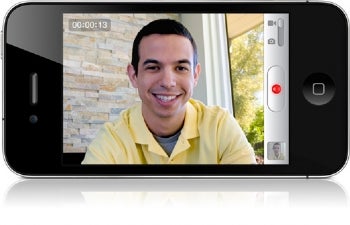
You might notice that many (if not the majority) of the new 4G handsets being announced these days have front-facing cameras in addition to the camera on the back. We’re even beginning to see a move from 1-megapixel front-facing cameras to 2-megapixel cameras, which increase the quality of the video of the caller being sent upstream through the network.
Videoconferencing is a bit different from HD video streaming in that it is a real-time, bidirectional application. Like HD video streaming, videoconferencing requires a certain threshold of download speed--preferably around 1 megabit per second--to pull down the moving image of the person on the other end from a server on the network. The real challenge, however, is the upload speed. Because today’s networks are configured to serve up far faster download speeds than upload speeds, and because videoconferencing requires adequate downlink and uplink speeds, poky upload speeds are often the bottleneck in substandard videoconferencing sessions.
Thankfully, 4G networks not only offer higher download speeds but also higher upload speeds. Sprint’s and Verizon’s respective 4G networks, for example, can consistently deliver upload speeds of more than 1 mbps--enough to accommodate the uplink requirement of mobile videoconferencing.
Low latency is even more important to videoconferencing than it is to HD video streaming. In-person communications involve very little gap between one person’s talking and the other person’s responding; we rely on quick verbal and visual clues to know when to speak and when to listen. When the conversation is taking place over a network, even the slightest delay in communicating those cues can cause the callers to begin talking over each other.
But again, the 4G networks of today reduce the latency of 3G networks by about two-thirds. Even at 4G speeds, mobile videoconferencing may not be perfect, but it’s likely to be good enough for effective communication--and it will probably only get better as network speeds increase and handset cameras improve.

Mobile Gaming

Gamers have long imagined a day when they can play high-definition games with their friends using their mobile devices. That time has come. The advent of 4G will likely spur the first generation of real-time mobile games that operate on cellular networks.
The limitations of 3G networks have confined gaming to an asynchronous model. In a Scrabble game, for instance, one player takes a turn placing a word on the board, and then the other player receives a notification when the network is ready for the next move. Such games don’t require fast network connections or low latency rates.
But because 4G networks can deliver more data packets (upstream and downstream) at a more predictable rate and with less latency, a whole new class of games is becoming possible on mobile devices. The games we’re used to playing on a home PC with a wired broadband connection will become possible on devices connected on a cellular network.
Mobile gaming
The 4G networks will be able to accommodate synchronous gaming--games in which players make quick moves in reaction to the moves of other players, or to the moves of a virtual opponent that the game creates at the server. In a shooter game, for example, Player A might be dodging the shots that Player B fired in real time, while reacting to his opponent's evasive moves to decide where to fire his own shots. For that kind of quick interplay to work, players must be able to see and hear these events almost immediately when they happen.
Another (more peaceful) example is Rock Band, which Verizon featured in a 4G demonstration at the Consumer Electronics Show in Las Vegas. In the game, a group of mobile players must play in unison with the music the game generates, following visual cues on the screen. Meanwhile, they must play in unison with other (mobile) band members in real time.
Such synchronous games rely on very fast download speeds to convey a high-definition gaming environment to the mobile device, as well as to communicate the movement of the game to all players quickly. Very low latency is necessary to communicate the moves of the players almost instantaneously to the server and to one another. Such games also depend greatly on the reliability of the network connection; the network can compensate for a certain number of lost packets, but if too many are lost, the fluidity of the game breaks down. And finally, the network must allow for very little jitter, meaning that the rate at which the packets flow back and forth between the players and the server should remain relatively constant and not slow down or speed up drastically.
That’s a lot to ask of a radio network with no wires.
Today 4G networks are far from ubiquitous in the United States, and the network technology the mobile carriers are currently building out represents only the earliest stages of 4G's evolution. It will be the mass appeal of mobile apps such as HD video streaming, videoconferencing, and gaming that will accelerate the arrival and improvement of 4G service. Don’t be too surprised if these apps have become mainstream by the end of 2013.

Sunday, December 12, 2010

IronKey Personal S200 Flash Drive Is Rugged and Secure

The IronKey Personal S200 is possibly the slickest combination of software- and hardware-based security in the flash drive market. Though you log on via software, the S200 uses hardware encryption so there's no software running on your PC that can be hacked to intercept data. It's also stylishly rendered in brushed silver metal, rugged, and easy to use.

The Personal S200 uses a small CD-emulation partition to store and auto-run its control panel, which is used to log on and administer the drive. The control panel is portable, so no installation is required and it can run on Windows, the Mac, and Linux. It's nicely laid out, easy to learn and you may add icons to it for any portable apps you load onto the data partition.
You may enter the password via a randomizable onscreen keyboard to foil key-loggers if the situation demands. One flourish I particularly enjoyed was that that actual data partition remains hidden until you've entered the correct password. You may also log on in read-only mode.
IronKey couples the Personal S200 with an online account at my.ironkey.com, which is secured with a password, questions, and an image or 45 user-defined phrase combination. There you may back up and retrieve your device password, and any passwords stored in the included Identity Manager password management software that makes it easier to employ complex passwords online. If you log onto the Web portal using anything other than the portable Firefox browser shipped on the IronKey, then you must then enter a code emailed to you after you enter your user name and password. Nice.
If you're not looking for drive with biometrics, such as the Imation Defender F200, or one with a keypad, such as Lok-It, then the IronKey is a stylish and exceptionally well-conceived flash drive security product.

World's Smallest Battery: Real-Time Observation of Nanowire Anode to Help Improve Lithium Batteries

A benchtop version of the world's smallest battery -- its anode a single nanowire one seven-thousandth the thickness of a human hair -- has been created by a team led by Sandia National Laboratories researcher Jianyu Huang.
To better study the anode's characteristics, the tiny rechargeable, lithium-based battery was formed inside a transmission electron microscope (TEM) at the Center for Integrated Nanotechnologies (CINT), a Department of Energy research facility jointly operated by Sandia and Los Alamos national laboratories.

Says Huang of the work, reported in the Dec. 10 issue of the journalScience, "This experiment enables us to study the charging and discharging of a battery in real time and at atomic scale resolution, thus enlarging our understanding of the fundamental mechanisms by which batteries work."
Because nanowire-based materials in lithium ion batteries offer the potential for significant improvements in power and energy density over bulk electrodes, more stringent investigations of their operating properties should improve new generations of plug-in hybrid electric vehicles, laptops and cell phones.
"What motivated our work," says Huang, "is that lithium ion batteries [LIB] have very important applications, but the low energy and power densities of current LIBs cannot meet the demand. To improve performance, we wanted to understand LIBs from the bottom up, and we thought in-situ TEM could bring new insights to the problem."
Battery research groups do use nanomaterials as anodes, but in bulk rather than individually -- a process, Huang says, that resembles "looking at a forest and trying to understand the behavior of an individual tree."
The tiny battery created by Huang and co-workers consists of a single tin oxide nanowire anode 100 nanometers in diameter and 10 micrometers long, a bulk lithium cobalt oxide cathode three millimeters long, and an ionic liquid electrolyte. The device offers the ability to directly observe change in atomic structure during charging and discharging of the individual "trees."
An unexpected find of the researchers was that the tin oxide nanowire rod nearly doubles in length during charging -- far more than its diameter increases -- a fact that could help avoid short circuits that may shorten battery life. "Manufacturers should take account of this elongation in their battery design," Huang said. (The common belief of workers in the field has been that batteries swell across their diameter, not longitudinally.)
Huang's group found this flaw by following the progression of the lithium ions as they travel along the nanowire and create what researchers christened the "Medusa front" -- an area where high density of mobile dislocations cause the nanowire to bend and wiggle as the front progresses. The web of dislocations is caused by lithium penetration of the crystalline lattice. "These observations prove that nanowires can sustain large stress (>10 GPa) induced by lithiation without breaking, indicating that nanowires are very good candidates for battery electrodes," said Huang.
"Our observations -- which initially surprised us -- tell battery researchers how these dislocations are generated, how they evolve during charging, and offer guidance in how to mitigate them," Huang said. "This is the closest view to what's happening during charging of a battery that researcher have achieved so far."
Lithiation-induced volume expansion, plasticity and pulverization of electrode materials are the major mechanical defects that plague the performance and lifetime of high-capacity anodes in lithium-ion batteries, Huang said. "So our observations of structural kinetics and amorphization [the change from normal crystalline structure] have important implications for high-energy battery design and in mitigating battery failure."
The electronic noise level generated from the researchers' measurement system was too high to read electrical currents, but Sandia co-author John Sullivan estimated a current level of a picoampere flowing in the nanowire during charging and discharging. The nanowire was charged to a potential of about 3.5 volts, Huang said.
A picoampere is a millionth of a microampere. A microampere is a millionth of an ampere.
The reason that atomic-scale examination of the charging and discharging process of a single nanowire had not been possible was because the high vacuum in a TEM made it difficult to use a liquid electrolyte. Part of the Huang group's achievement was to demonstrate that a low-vapor-pressure ionic liquid -- essentially, molten salt -- could function in the vacuum environment.
Although the work was carried out using tin oxide (SnO2) nanowires, the experiments can be extended to other materials systems, either for cathode or anode studies, Huang said.
"The methodology that we developed should stimulate extensive real-time studies of the microscopic processes in batteries and lead to a more complete understanding of the mechanisms governing battery performance and reliability," he said. "Our experiments also lay a foundation for in-situ studies of electrochemical reactions, and will have broad impact in energy storage, corrosion, electrodeposition and general chemical synthesis research field."
Other researchers contributing to this work include Xiao Hua Liu, Nicholas Hudak, Arunkumar Subramanian and Hong You Fan, all of Sandia; Li Zhong, Scott Mao and Li Qiang Zhang of the University of Pittsburgh; Chong Min Wang and Wu Xu of Pacific Northwest National Laboratory; and Liang Qi, Akihiro Kushima and Ju Li of the University of Pennsylvania.
Funding came from Sandia's Laboratory Directed Research and Development Office and the Department of Energy's Office of Science through the Center for Integrated Nanotechnologies and the Energy Frontier Research Centers program.

Tuesday, November 23, 2010

VOW (Videos on Warid)

VOW (Videos on Warid)

Warid brings a fabulous service for its customers to enjoy free videos on the move where ever they are. Our valued customers can now access the world of entertainment with a user friendly interface on their mobiles via the new ‘VOW’ (Videos on Warid)Service. No matter what age or where you are, we are sure you will find something to your liking that will provide you with good entertainment and no more boring moments in your day.

‘VOW’ shall be constantly updated with new FREE video content that users can view using their GPRS enabled mobile phones. ‘VOW’ provides mobile video content for full screen video streaming and downloading over Warid’s widespread GPRS/Edge network.
Enjoy ‘VOW’ by visiting  vow.waridtel.com from your GPRS enabled mobile handset.
*GPRS charges apply.  
For further details on ‘VOW’ mobile video content click here.

Life ka network: Warid Bol Anmol

Warid Bol Anmol
You expect the best rates and superior network quality from Warid.  But we are always looking to exceed your expectations, because we know how to take care of our family. 
Keeping in line with our tradition of providing innovative and exciting offers to our family members, we present the “Warid Bol Anmol Program”.
Now, without any activation or conditions, you will be rewarded with an immediate bonusfor any activity on the Warid network! All you have to do is spend as low as Rs. 5 a day on the network and you will be rewarded with an immediate bonus with our “Bonus Rozana Program”.  Ramp up your usage to Rs. 10 a day and you’ll be automatically entitled to the “Bonus Mahana Program”. The more you spend, the more you get. Keep using your Warid connection and keep winning!
You thought your words were precious; they just got even more valuable…

Friday, October 29, 2010

Sprint CEO thanks iPad for uptick in Overdrive demand

Well, wouldn't you know it? Seems that tongue-in-cheek marketing campaign may actually be working. Way back in April of this year, Sprint decided it would begin offering its own iPad case, despite the fact that even today the iPad isn't sold in Sprint stores. The reason? It's the perfect opportunity to push the Overdrive, a 4G mobile hotspot that's able to take the iPad (and any other WiFi-enabled device) to 4G speeds where available. In a recent interview with GigaOM, the carrier's CEO (Dan Hesse) confirmed that most iPads being sold are of the WiFi variety, and due to that, "the company has seen an uptick in demand for its Overdrive (3G/4G) MiFi wireless-hotspot device, as people use it to connect their iPads to the Internet when on the go." He failed to exaggerate on actual numbers, but it's obvious he's in favor of Apple's darling tablet selling like hotcakes -- after all, how else are you going to get an iDevice into 4G territory?

Samsung notches record profits, aims to sell ten million Galaxy S phones this year

My, how a year changes things. Q3 2009 was a nightmare for mega-corps in terms of earnings, but things have definitely been on the up and up just 12 months later. After Sony pushed out a glowing quarterly report this morning, rival Samsung has done likewise. The company saw record breaking revenues of ₩40.23 trillion ($35.8 billion) as well as profits (₩4.46 trillion; $3.96 billion) in this most recent quarter, with Sammy crediting strong semiconductor performance for the bulk of its newfound fortune. A tip of the hat was also given to its mobile communications business, with the outfit moving a staggering 71.4 million phones during Q3 2010 (a 19 percent boost year-over-year). Reports are noting that between five and seven million of those were of the Galaxy S variety, and it's hoping to sell ten million of 'em before the close of this year. All that said, the firm isn't expecting an equally rosy Q4, noting that a strengthening won and heightened price pressures around LCD panels and DRAM could put a damper on skyrocketing profits. So much for taking a day to celebrate, eh?

How would you change Motorola's Droid 2?

You've already told us (and the world, we might add) how you'd change just about every other Droid phone out there, so why not? Motorola's Droid 2 has been in the hands of loyal can-doers for a few months now, giving the user base plenty of time to nitpick and stew about things that aren't... quite... right. We had a few bones to pick with the handset during our August review, but as the regulars know, this space isn't about rekindling old flames. It's about you telling us how you'd change things if given the lead design position on this here phone. Would you have upgraded the camera? Changed the slide? Tweaked the Android build? Offered it on another carrier? Hit us with your best shot in comments below.

Thursday, October 28, 2010

Sony PlayStation phone to join crowded field?


A Sony PlayStation phone -- long talked about, but late to the mobile party -- may be coming after all.
Engadget shared photos of a prototype PlayStation phone it said may be out this year, although 2011 is "looking much more realistic."
Sony Ericsson, contacted by msnbc.com, says it "does not comment on rumours, speculation or unannounced products," which leaves the issue fairly muddled.
With the iPhone (and iPod Touch) a heavy player in the mobile games market, and Android growing quickly as well, the notion of a PlayStation phone seems almost ... quaint, something that might have made sense several years ago, but is outdated now.
Not necessarily so, says Avi Greengart, research director for consumer devices at Current Analysis.
While the PlayStation phone is "only a rumor at this point ... mobile gaming on phones is a large and growing trend."
Sony Ericsson's phones are not as high-profile or alluring as iPhones, Android devices or BlackBerrys. And Microsoft, with its new Windows Phone 7 integrating Xbox Live, looks to finally have real life. (Msnbc.com is a joint venture of Microsoft and NBC Universal.)
But it's all those threats that make a PlayStation phone's chances good, says Ross Rubin, director of industry analysis for The NPD Group research firm.
"Games have been among the most popular apps for smart phones, and Apple has been able to leverage developer interest in the iPhone to make the iPod Touch a more direct competitor to handheld consoles," he said.
Sony Ericsson could use a win here. The company's overall cell phone shipment ranking fell to sixth place in the second quarter, down from fourth in the first quarter, according to a recent report from iSuppli research.
That "marked the first time in at least three years that Sony Ericsson didn’t rank among the Top 5 global cell phone brands."
But, notes iSuppli, Sony Ericsson also "achieved a 15.4 percent increase in smart phone shipments during the second quarter. This made Sony Ericsson the fourth fastest growing smart phone brand during the second quarter."
With its "shift" from "volume to value-add" -- and a PlayStation phone would be that -- the company is "positioning itself to cash in on the fastest growing and most profitable segment of the global wireless market,” said Tina Teng, senior analyst for wireless communications at iSuppli.
The PlayStation phone, according to Engadget, would use Google's increasingly popular Android operating system, and Sony Ericsson CEO Bert Nordberg recently said that the company's goal is to "become the global No. 1 handset provider on the Android platform."
Engadget says the PlayStation phone will use Android and Sony's "Marketplace, which will allow you to purchase and download games designed for the new platform ... The device ... is sporting a 1GHz Qualcomm MSM8655 ... 512MB of RAM, 1GB of ROM, and the screen is in the range of 3.7 to 4.1 inches."
Gaming website NowGamer, based in Britain, thinks the phone is fake. A "closer look at the top screen in particular reveals a number of telltale signs, such as a large amount of dirt collecting around the screen, as well as mention of 'A' and 'B' buttons on the interface."
Whether the prototype is real or not, a PlayStation phone stands a good chance, says Rubin, who makes a good point.
"A handset that has close ties to a home console has an opportunity to be a more casual companion since gamers need to carry phones anyway."

Monday, October 25, 2010

Extend Your Evo 4G's Battery Life With These Tweaks

When you think of HTC’s EVO 4G phone, two things immediately pop-up in your mind: 1) wow this thing is amazing, and 2) wow this battery life is absolutely terrible. But there is some good news: The phone is still amazing, and now there are some ways that can help combat the battery issue.
First things first; let’s get the easy tweaks (that you probably already know) out of the way:
  1. Turn off 3G/4G when you’re not using either of them;
  2. Turn off the GPS if you’re not using it;
  3. Lower the brightness to something reasonably bearable/useable to you;
  4. If you are using wallpapers/backgrounds, use black-colored ones (blackle, anyone?);
Okay, I know what you’re thinking: “Well, that was dumb. I already know that.” But here’s the fun part! Visit the XDA Developers community find out how to calibrate the battery, clear the battery stats, experiment with Kernels, and use the Collin_ph Battery Tweak.
Most of the XDA tips are simple and straightforward (minus that last one, for most users), so I’m not going to repost what they’ve already done. Trust me, as a fellow EVO 4G user, you can’t imagine how much better this made my day. Happy tweaking!

Mobile Phones and Apps: Best of 2010

The popular Android 2.2 operating system for Google smartphones, the Samsung Epic 4G phone, and a host of interesting apps for both business and pleasure top our list.

Call 2010 the year of the smartphone and mobile software. Phones like the Motorola Droid X, the HTC Incredible, and the Apple iPhone 4--and the many creative apps we liked this year--made this the largest category of products in the PCWorld 100.

Google Android 2.2

Smartphone operating system; included with phone Mobility led the tech industry in innovation in 2010, and amid a flourishing array of great mobile products, we found one consistent standout this year: Google Android. Expected to eclipse Apple's iOS in market share by year's end, Android brings powerful apps, a slick interface, and extreme customizability to a host of phones and tablets available across a multitude of carriers. As a result, Android provides selection--the one thing that the iPhone platform can't promise. Add to that mix a flexible browser with Flash 10.1 support, OS-wide voice control and dictation features, and a rapidly expanding app ecosystem, and Android 2.2 (aka "Froyo") is the OS to beat in the burgeoning mobile age.

Best Tech Products 2010: Full List, 1-100

One of the best parts of our job is looking at hundreds of products every year. Many perform well, some are silly, and a select group rises above the pack. Here are the hardware, software, services, sites, and apps that we decided--after much discussion--stood out this year.

1. Google Android 2.2

2. Apple iPad

3. Amazon Kindle (third-generation)

4. Netflix

5. Samsung Galaxy Tab

6. Sony Alpha NEX-5

7. HP Envy 14 Beats Edition

8. Samsung Epic 4G

9. Instapaper

10. Microsoft Security Essentials

11. Samsung UN55C8000

12. HP TouchSmart 600 Quad

13. Apple iPhone 4

14. Google Chrome

15. HTC HD7

16. Crucial RealSSD C300

17. Blizzard Entertainment StarCraft II

18. Panasonic Lumix DMC-LX5

19. Microsoft Office 2010

20. Samsung LN46C650

21. Apple TV

22. Western Digital WD TV Live Plus

23. Canon Pixma MG8120

24. Blizzard Entertainment World of Warcraft: Cataclysm

25. Motorola Droid X

26. Adobe Creative Suite 5

27. Canon EOS 7D

28. Sony Handycam NEX-VG10

29. Alienware M11x (second revision)

30. Sonos ZonePlayer S5

31. Sony Reader Pocket Edition PRS-350

32. nVidia GeForce GTX 460

33. Origin Genesis Midtower

34. Google Voice

35. Logitech C910

36. Bump

37. Norton Antivirus 2011

38. MOG

39. AMD Phenom II X6 1090T

40. Livescribe Echo Smartpen

41. Google Gmail

42. Western Digital 3TB My Book Essential

43. Clickfree Network CN2

44. Flipboard

45. Panasonic HDC-SDT750

46. Handcent SMS

47. HTC Droid Incredible

48. SlingPlayer Mobile

49. At Bat 2010 for iPad

50. XMind

51. PC Tools Internet Security 2011

52. Seagate Momentus XT

53. Cisco M20 Valet Plus

54. Rovio Angry Birds

55. MyInnergie mCube Mini

56. Lookout Mobile Security

57. Maingear F131

58. ATI Radeon HD 5870

59. iVina BulletScan S300

60. DimDim

61. Smartfish ErgoMotion Mouse

62. Lenovo ThinkPad x100e

63. Second Rotation Gazelle

64. Facebook

65. Plantronics K100

66. Taptrix Brushes

67. Alphonso Labs Pulse News Reader

68. Corsair 800D

69. Qnap TS-259 Pro Turbo NAS

70. Fuze Box Fuze Meeting

71. Evernote

72. Iomega eGo SuperSpeed USB 3.0

73. Gateway SX2840-01

74. Jabra Clipper

75. Lenovo ThinkPad W701ds

76. FitNow Lose It

77. Cisco Flip UltraHD 8GB with FlipPort

78. Samsung BD-C6500

79. PopCap Games Plants vs. Zombies HD

80. Asus Eee PC 1201n

81. Genieo

82. Jabra Extreme

83. Virgin Mobile Beyond Talk Plans

84. Dell UltraSharp U2711

85. Grooveshark for Android

86. Epson PictureMate Show PM 300

87. Polar WearLink+ Transmitter Nike+

88. RideCharge Taxi Magic

89. Belkin Conserve Smart AV

90. Bitalpha Taska

91. 3M MPro120

92. B&W P5 Mobile Hi-Fi Headphones

93. Apple iPod Touch (2010 version)

94. TheFind.com

95. Microsoft Arc Touch Mouse

96. Adobe Photoshop Lightroom 3

97. Astro A30 Headset

98. Prezi

99. TomTom XXL 550-TM

100. Ubuntu 10.10

Thursday, October 21, 2010

AT&T Adds Record Number of iPhones

AT&T Inc. added a record number of iPhone subscribers in the third quarter, but paid heavily to do so.

The company, which is the exclusive U.S. carrier for the Apple Inc. phone, said Thursday it activated 5.2 million iPhones in the quarter, 62% more than the record set earlier this year. About a quarter of the phones sold in the latest quarter were to new subscribers, highlighting the device's importance to AT&T's core wireless business

With the gains, AT&T locked customers into two-year contracts ahead of a possible loss of iPhone exclusivity next year.

But the growth came at a cost, with the high subsidies that AT&T pays to Apple cutting into the carrier's profit.

AT&T's third-quarter earnings nearly quadrupled on a tax settlement and the sale of the company's business-software arm. But expenses in the Dallas-based company's wireless business jumped by $1.5 billion to $11.7 billion, which AT&T said came from costs associated with adding new devices.

"The iPhone activations were off the charts," said Jonathan Chaplin, an analyst at Credit Suisse.

A majority of the iPhone activations came from existing customers after AT&T allowed for early upgrades, locking the customers into new two-year contracts. AT&T is banking on those contracts to blunt potential defections when it is no longer the sole U.S. carrier to offer the iPhone. Verizon Wireless, a joint venture betweenVerizon Communications Inc. and Vodafone Group PLC, will start selling the iPhone early next year.

AT&T in the last few months also has been expanding its portfolio of smartphones, including devices using Google Inc.'s Android software, Research In Motion Ltd.'s new BlackBerry Torch and the coming line of phones using Microsoft Corp.'s Windows Phone 7 platform.

AT&T signed up a net of 745,000 new wireless customers in the third quarter, bucking a string of quarters with disappointing customer growth. The results ran counter to the broader wireless industry's slower growth. Nearly all consumers already carry a cellphone and many consumers are moving to less-expensive, contract-free offerings. The iPhone, however, has proven to be impervious to those trends.

AT&T reported profit of $12.34 billion, or $2.08 a share, compared with $3.19 billion, or 54 cents a share, a year earlier. Excluding a tax settlement and the sale of the Sterling Commerce business-software unit to International Business Machines Corp. earnings came were 55 cents share. That compares with 53 a share excluding items a year earlier.

AT&T's revenue rose 2.8% to $31.58 billion.

"The trends on a whole were fine, although uninspiring," Mr. Chaplin said.

Sales were driven by a 10.5% increase in wireless-service revenue as more customers signed up for pricier data plans. AT&T over the summer adopted a tiered pricing structure, restricting the amount of data a customer can receive or send on a cellphone at a less-expensive introductory rate that has been effective at convincing customers to upgrade plans for smartphones.

Beyond typical cellphones, AT&T has been connecting nontraditional wireless devices, including dog collars and medicine bottles. The company added 1.2 million so-called connected devices in the quarter.

Sales in AT&T's land-line business declined slightly, to $15.3 billion. AT&T continues to lose traditional fixed-line phone customers, although the company has offset those losses with new business. The company's U-Verse service, which benefits from an upgraded network, added 236,000 TV customers and 148,000 Internet connections.

Consumer revenue rose for the first time in nearly three years, Mr. Chaplin said, adding that heavy cost cuts led to an improvement in margins.

The business arm posted a 3.9% decline in revenue, although the company said it sees further signs of stabilization with corporate spending, which is heavily tied into employment.

dotMobi Study Highlights Mobile Web Growth

dotMobi, the mobile web solutions firm behind .mobi, which it notes is the only ICANN-approved internet address created specifically for labelling content that works on all mobile phones, has released details of its third annual study on mobile web trends.

The dotMobi Mobile Web Progress study examined websites available via the world’s most-used global top-level Internet domains: .com, .net, .org, .info and .mobi. The results reveal that the mobile web is continuing its explosive global growth. The 2010 study showed approximately 3m mobile-ready sites, compared to just 150,000 in 2008, representing a two-year growth rate of more than 2,000 per cent, outstripping early PC internet growth rates. The web analyst Netcraft found that, between 1996 and 1998, the size of the desktop web grew from 150,000 sites to 2m sites, a growth rate of 1,333 per cent.

“Many brands and businesses are seeing that mobile is a vital, unique channel and not just a smaller desktop web,” says dotMobi CEO, Trey Harvin. “Big brands are now adopting mobile web strategies, but we still have a long way to go, given the ubiquity of mobile phones compared to computers… Businesses of all sizes need to prepare for the change in how people will access content by embracing the mobile web.

“Small business owners must engage their growing mobile audience as large brands have. Tools like Dreamweaver and WordPress enabled this to happen on the desktop web by making site creation fast, easy and cheap. Developments like jQuery Mobile, DeviceAtlas and goMobi are now making this happen for the mobile web.”

To better understand how the world’s most popular websites are handling mobile phones, dotMobi looked closely at the top 500,000 websites as determined by Alexa, the Amazon.com intelligence company.

Within the Alexa top 1,000 sites, 40.1 per cent of all sites are mobile-friendly. These sites represent the world’s most popular web properties, like Google, Facebook and Yahoo!

Beyond the top 1,000, mobile friendliness still holds strong, but is not yet as widespread. Of the top 10,000 Alexa sites, 29.7 per cent perform well on mobiles. Once the input data is broadened to include the top 500,000 sites, the total number of mobile-friendly sites drops to 19.3 per cent.

dotMobi’s director of engineering, Ronan Cremin, says: “The study demonstrates that apps are shifting to become a part of a broader mobile web strategy rather than the strategy itself. While some brands build individual apps for multiple platforms like iOS, Android and BlackBerry, businesses are increasingly choosing a mobile web solution for their content, as many of the Alexa top 1,000 have already done.

“As more tools come to market and HTML5 support spreads, mobile web apps will displace most native apps. Brands can now build a single mobile web presence that works across all mobile devices without the limitations, costs and maintenance issues of multiple app platforms. The mobile web lets you address all of your mobile customers, not just those with iPhones and Android handsets.

Cremin adds that companies that have focused on good mobile user experiences and mobile-friendly websites now have strong advantages in competing for visitors, sales, and customer loyalty, and that these advantages are already positively impacting sales via their desktop websites.

Monday, October 18, 2010

Mobile WiFi: How mobile WiFi works?

What is mobile WiFi?
Now with 3 you can have Mobile Broadband with Wi-Fi and you won't even have to hunt for a hotspot. Our wireless modem works with anything that’s Wi-Fi enabled, like a laptop or iPod touch.
It’s small enough to fit in your pocket, so your Wi-Fi can go wherever you go.

How mobile WiFi works?
With Mobile Wi-Fi from 3, you can connect to Wi-Fi enabled devices, like laptops and the iPod touch to the internet.

Mobile Wi-Fi also means you can connect a variety of devices to the wireless modem at the same time. So while you’re checking emails on a laptop, you can download a track from iTunes onto your iPod Touch.

There’s no need to load any software onto your laptop or PC first – the Wi-Fi just needs to be turned on.